
Making Your site shine (And actually show up in search results!)
Let’s talk about SEO — Search Engine Optimisation. If you’re building or running a website and haven’t given SEO a second thought, we need to chat. It’s kind of a big deal. Think of SEO as the roadmap that helps search engines find and understand your website. Without it, you’re basically throwing a party and forgetting to send out invitations. And it’s important that you think about it at the start of the process, so it can be woven in seamlessly to what you do, not as an afterthought. It’s easier anyway.
In this post, I’ll break down what SEO is, why you should care (a lot), and how you can make sure your site is optimised — from the words on the page to the sneaky little details like meta descriptions and image alt text. Let’s dive in!

What even is SEO, anyway?
SEO stands for Search Engine Optimisation, but you probably already knew that. In simpler terms, it’s the secret sauce that helps your website show up in search engines when someone types in a question, like “What’s the best pizza near me?” (which, let’s be honest, is the kind of content we all search for).
There are two kinds of SEO:
- On-page SEO: Everything you can control on your site—your copy, headers, meta descriptions, keywords, and images.
- Off-page SEO: Things happening outside your site, like backlinks, social media mentions, and general online buzz.
We’ll focus on on-page SEO here, because that’s where you have the most control and can make the biggest impact.
Why Should I Care About SEO?
Great question! If you’re wondering why SEO matters, here’s the thing: when someone searches for something, they usually only click on the first few results they see. In fact 67% of clicks go to the top five results on Google. So, if your website isn’t optimised for SEO, it could be sitting like a single person – lonely and untouched.

Here’s what good SEO can do for you:
- Boost visibility: The higher you rank, the more people will see your site.
- Increase traffic: More eyeballs = more clicks = more potential customers.
- Build credibility: If your site shows up at the top, people tend to trust you more. After all, you’re literally on top of things.
- Drive conversions: When your site is optimised, visitors can find what they need quickly, and that means more sign-ups, purchases, or whatever else you want them to do.
How to Master SEO Like a Pro
Now that you’re on board with why SEO is important, let’s talk about how to do it right. The good news? You don’t need to be a tech wizard to get started—just a bit of strategy and attention to detail.
1. SEO in Your Website Copy
First things first: the words on your site matter a lot. Your copy needs to be clear, engaging, and most importantly, sprinkled with the right keywords that people are searching for (but not so many that it looks like a spammy mess). The emphasis in this is ‘keywords that people are searching for’ – remember, if you want organic traffic, we’re targeting customers that are likely searching for services or products, not you as a business and what you want to tell people.
Pro tips for writing SEO-friendly copy:
- Do your keyword homework: Use tools like Google Keyword Planner to figure out what your audience is actually searching for. (Hint: it’s not “best cat sweaters 2024,” unless that’s your niche!) If your site has been live for a while, and tied up with Search Console, you can also check what terms people are searching to find you so this might help you find a niche.
- Use keywords naturally: Don’t force it. Make sure your keywords fit naturally into the text, like seasoning a good pasta — just the right amount.
- Create valuable content: Google loves helpful, relevant content. Focus on solving your audience’s problems or answering their questions. If your content is good, people will stick around (and search engines will notice).
- Consider installing a plugin on your website (especially if it’s WordPress) like Yoast; this will allow you to set you keywords within each page and you can then review the traffic light system to check how you’re performing. It will even give recommendations of what you’re missing or what might improve your performance.
2. Nail Your Meta Descriptions
Meta descriptions are those little snippets of text that show up under your page title in search results. Think of them as your website’s elevator pitch. They don’t directly affect your rankings, but a great meta description can convince people to click on your site instead of your competitor’s.
How to write a killer meta description:
- Keep it short and sweet: You’ve got about 150-160 characters to make your point, so make every word count.
- Include your keyword: But make sure it reads like a human wrote it. No one wants to click on “Best pizza near me best pizza in town order best pizza here.” but fold it in smoothly.
- Add a call to action: “Learn more,” “Get started,” or “Find out how”—something that invites the user to take the next step.

3. Headers: Not Just for Looks
Headers (H1, H2, H3, etc.) do more than just break up your content and make it look nice—they help search engines understand what your page is about. They’re like signposts, guiding both readers and Google through your content.
Header tips:
- H1 is your main title: Your H1 should be the title of the page and include your primary keyword. Just one per page, please!
- H2s and H3s for structure: Use H2s for subheadings and H3s for subsections. These not only make your page easier to read but also give search engines a clearer sense of your content hierarchy.
- Be descriptive: Your headers should tell readers (and search engines) what each section is about. No vague “Welcome to my site” nonsense—be specific!
4. Don’t Forget Image Alt Text
Images make your website more engaging, but did you know they can help your SEO, too? That’s right—your images need a little love in the form of alt text, which tells search engines (and visually impaired users) what your images are about.
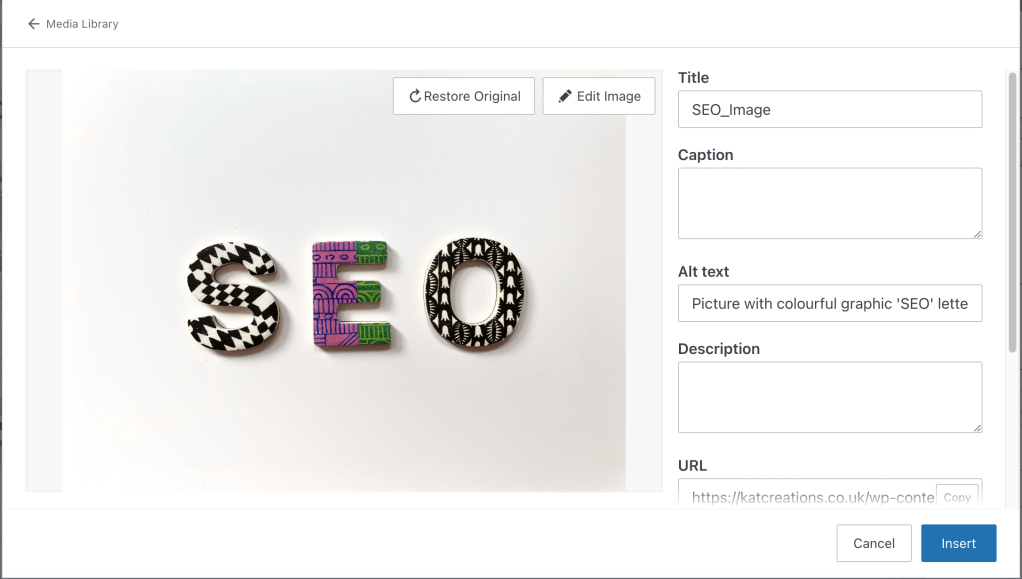
Alt text best practices:
- Describe the image: Be clear and concise. For example, “Golden retriever puppy playing with a tennis ball” is way better than “dog.”
- Use keywords (when relevant): If you can naturally fit a keyword in, go for it! Just don’t overdo it. Google can smell keyword stuffing from a mile away and this can actually negatively affect your ranking when the bots come crawling.
- Keep it short: Alt text should be brief—around 125 characters.
Bonus SEO Tips
- Make it mobile-friendly: Over half of all web traffic comes from mobile devices, so your site needs to work (and look) great on phones and tablets. In fact, my rule of thumb is to build mobile-up; not only will this make it accessible, but it’ll also help you keep your content on point and not too waffly (She says, with this three thousand word essay that i’ve written here..).
- Speed matters: If your site takes forever to load, people (and Google) will bounce. Tools like Google PageSpeed Insights can help you figure out what’s slowing you down.
- Get those backlinks: Backlinks (links from other sites to yours) are like votes of confidence from the internet. The more reputable sites that link to you, the better!
Final Thoughts
SEO isn’t just a buzzword or some complicated thing only techies should care about—it’s the key to getting your website seen by the right people. By optimising your copy, meta descriptions, headers, and image alt text, you’re setting your site up for success.
So roll up your sleeves, put on your metaphorical SEO hat, and start optimising. After all, the internet is a big place—let’s make sure your site gets the attention it deserves!
 KatCreations